Finding the right daily devotional journal ideas can transform your quiet time from routine to revolutionary. Whether you're staring at a blank page wondering what to write or feeling stuck in repetitive patterns, the right prompts can unlock deeper conversations with God and reveal insights you might otherwise miss.
Devotional journaling isn't about perfect prose or theological expertise. It's about creating space to process what you're reading in Scripture, wrestling with honest questions, and tracking how God is working in your everyday life. The prompts and templates in this guide will help you build a sustainable practice that grows your faith one entry at a time.
Let's explore practical devotional journaling prompts and frameworks that work for beginners and seasoned journalers alike.
Why Devotional Journaling Matters for Spiritual Growth
Devotional journaling matters because writing slows you down, forces clarity, and creates a tangible record of your spiritual journey that reading alone never produces.
Writing down your thoughts during devotional time does something powerful that reading alone cannot. It slows you down, forces clarity, and creates a tangible record of your spiritual journey.
When you journal, you're not just consuming Scripture, you're interacting with it. You notice details you'd skim past. You ask questions that lead to breakthroughs. You document prayers and later see how God answered them in unexpected ways.
Research shows that writing by hand activates different parts of your brain than typing, improving memory and comprehension. But whether you prefer pen and paper or a digital document, the act of translating thoughts into words deepens your understanding and retention.
Devotional journals also become precious spiritual artifacts. Flipping back through old entries lets you see patterns, celebrate growth, and remember God's faithfulness during seasons when faith feels difficult.
Scripture Reflection Writing: A Framework for Deeper Understanding
Frameworks like the SOAP method and the 5 Rs give your reflection direction so you're never staring at a blank page, while still leaving room for the Holy Spirit to lead.
Before diving into specific prompts, understanding a basic framework for scripture reflection writing will help you approach any passage with confidence.
The SOAP method remains one of the most effective approaches:
-
Scripture: Write out the verse or passage you're reading
-
Observation: What do you notice? Who's speaking? What's the context? What words stand out?
-
Application: How does this apply to your life right now?
-
Prayer: Write a prayer responding to what you've learned
Another powerful framework is the 5 Rs method:
-
Read: The passage slowly, multiple times if needed
-
Reflect: What is God saying through these words?
-
Respond: What emotions or questions arise?
-
Record: Write your insights and reactions
-
Return: Come back to challenging passages later
These structures prevent you from staring at a blank page. They give your thoughts direction while leaving room for the Holy Spirit to lead your reflections in unexpected directions.

50+ Daily Devotional Journal Ideas to Try This Week
Below are 50+ prompts organized by category, gratitude, Scripture deep-dives, confession, intercession, seasonal templates, creative reflection, weekly review, and relationships, to mix and match with your current season.
Here are practical prompts organized by category. Mix and match based on what resonates with your current season.
Gratitude and Praise Prompts
-
List 10 specific things God has done for you this month
-
Describe a recent moment when you felt God's presence
-
What attribute of God are you most grateful for today?
-
Write about a prayer God answered in an unexpected way
-
How has God provided for you in the past week?
-
What aspect of creation reminds you most of God's character?
Scripture Deep-Dive Prompts
-
Rewrite today's verse in your own words
-
What question would you ask the author of this passage?
-
How does this verse challenge your current thinking?
-
What does this passage reveal about God's character?
-
Find a cross-reference verse and compare the two
-
What would obedience to this passage look like today?
-
Which word in this verse speaks loudest to you right now?
Personal Growth and Confession Prompts
-
What area of your life needs God's transformation most?
-
Describe a recent situation where you missed an opportunity to show love
-
What fear is holding you back from deeper faith?
-
Write a letter to God about something you're struggling to surrender
-
What lie have you been believing that contradicts Scripture?
-
How have you seen yourself grow spiritually this year?
-
What habit would bring you closer to God?
Intercession and Prayer Prompts
-
List five people you're praying for and specific needs for each
-
Write a prayer for someone who has hurt you
-
What global or community issue is on your heart today?
-
Pray through the Lord's Prayer line by line, personalizing each phrase
-
Who needs encouragement? Write a prayer for them, then consider sending it
-
What spiritual breakthrough are you asking God for?
Faith Journal Templates for Different Seasons
-
During doubt: What do I know to be true about God, even when I don't feel it?
-
During waiting: How has God been faithful in past waiting periods?
-
During joy: How can I steward this blessing well?
-
During grief: What comfort does Scripture offer right now?
-
During transition: What is God teaching me through this change?
-
During routine: Where is God in the ordinary moments of today?
Creative Reflection Prompts
-
Draw or doodle a visual representation of today's verse
-
Write a psalm of your own, modeling David's honesty
-
Imagine you're a character in today's Bible story, what would you feel?
-
Create an acrostic using a key word from your reading
-
Write a dialogue between you and God about today's passage
-
List metaphors that describe your current relationship with God
Weekly Review Prompts
-
What theme has emerged in your devotions this week?
-
How did you see God work in unexpected ways?
-
What verse keeps coming back to your mind?
-
Where did you resist what you were reading? Why?
-
What's one action step from this week's reading?
-
How has your perspective shifted since Monday?
Relationship and Community Prompts
-
How can today's reading improve your relationships?
-
What does this passage teach about loving others well?
-
Who in your life exemplifies today's biblical principle?
-
How can you encourage someone with what you learned today?
-
What conflict needs the wisdom from this Scripture?
How to Create Your Own Faith Journal Templates
You build a personalized faith journal template by deciding what you want to track. Scripture, observations, application, prayer, and gratitude, and keeping it flexible enough to actually use.
While prompts are helpful, creating personalized faith journal templates ensures your practice stays fresh and relevant to your spiritual needs.
Start by identifying what you want to track. Some people benefit from mood check-ins alongside Scripture. Others want space for sermon notes. Many find value in tracking specific prayer requests and answers over time.
A simple custom template might include:
-
Date and Scripture reference
-
One-sentence summary of the passage
-
Personal observations (3-5 bullet points)
-
Application question: "What is God asking me to do/change/believe?"
-
Prayer focus for the day
-
Gratitude note
Digital journalers can create templates in note-taking apps like Notion, Evernote, or OneNote. Physical journalers might dedicate different notebook sections to different types of entries or use sticky tabs for quick reference.
The key is consistency without rigidity. Your template should serve you, not constrain you. Some days you'll fill every section. Other days, one powerful paragraph is enough.
Combining Bible Reading Plans with Devotional Journaling Prompts
Pairing a structured Bible reading plan with flexible journaling prompts gives your devotional practice both direction and depth without burning you out.
The most sustainable devotional practice pairs structured Bible reading with flexible journaling. This combination provides both direction and depth.
Choose a reading plan that matches your current capacity. New to Bible reading? Start with a Gospel or Psalms. Want to read through the Bible in a year? Pick a plan that includes Old Testament, New Testament, Psalms, and Proverbs daily.
After reading your assigned passage, spend 10-15 minutes journaling using one or two prompts from the lists above. You don't need to journal extensively about every verse, focus on what stands out or challenges you.
Here's a practical weekly rhythm:
-
Monday-Friday: Use observation and application prompts with your daily reading
-
Saturday: Review the week's entries and identify themes
-
Sunday: Journal about your church service or use a gratitude prompt
This approach prevents devotional burnout while building momentum. You're not trying to extract profound insights from every verse. You're showing up consistently and letting God speak through the rhythm.

Overcoming Common Devotional Journaling Challenges
The most common journaling roadblocks, not knowing what to write, no time, repetitive entries, feeling unproductive, and pressure to sound profound, all have simple, practical fixes.
Even with great prompts, obstacles arise. Here's how to navigate the most common ones.
"I don't know what to write." Start with the simplest observation. What's one word that stands out in today's verse? Write that word and explain why it caught your attention. Often, starting small unlocks bigger insights.
"I don't have time." Five minutes counts. Write one paragraph. Answer one prompt. Consistency matters more than length. A brief daily practice outweighs occasional marathon sessions.
"My entries feel repetitive." Rotate through different prompt categories weekly. If you've focused on gratitude, shift to confession or intercession. Variety keeps your practice dynamic.
"I'm not getting anything out of it." Revisit your purpose. Are you journaling to check a box or to genuinely connect with God? Sometimes changing your environment (journaling outside, in a different room, or at a different time) refreshes your practice.
"I feel pressure to be profound." Release that expectation. Your journal is for you and God, no one else. Honest questions and raw emotions matter more than polished theology. David's psalms include complaints, doubts, and messy feelings. Yours can too.
Making Devotional Journaling a Lasting Habit
You make journaling a lasting habit by linking it to something you already do daily, prepping your space the night before, tracking consistency without guilt, and celebrating milestones.
Building any new habit requires intentionality, especially spiritual practices that lack external accountability.
Link your journaling to an existing habit. If you already drink coffee every morning, journal while your coffee cools. If you read before bed, add five minutes of reflection before turning off the light.
Prepare your space the night before. Leave your journal open with a pen on top. Keep your Bible marked at tomorrow's reading. Removing friction increases follow-through.
Track your consistency without judgment. Mark a calendar or use a habit-tracking app. If you miss a day, simply start again the next morning. Guilt doesn't serve your spiritual growth.
Share your practice with a friend. Knowing someone else is also journaling creates gentle accountability. You might even exchange one insight per week via text.
Celebrate milestones. When you complete your first month, flip through your entries and notice growth. After three months, you'll have a meaningful record of how God has been speaking to you.
Resources to Support Your Devotional Journaling Practice
Devotional books, online communities, Bible study tools, and a journal you actually enjoy writing in all strengthen a journaling practice without replacing Scripture itself.
While prompts and templates provide structure, having quality devotional content enriches your journaling foundation.
Many journalers find value in devotional books that pair Scripture with brief reflections. These provide starting points for deeper personal exploration. Look for resources that encourage your own thinking rather than prescribing all the answers.
Online communities focused on Bible study and journaling can offer inspiration and accountability. Platforms like Instagram and Pinterest feature countless examples of creative devotional journaling, though remember your practice doesn't need to be aesthetically perfect to be spiritually meaningful.
Bible study tools like Blue Letter Bible or BibleHub help you explore original language meanings, cross-references, and commentaries when a passage confuses you. These resources deepen your understanding and give you more to write about.
The team at Mind Garden Press creates resources specifically designed to support consistent spiritual practices. Their materials focus on practical application and sustainable growth.
Consider investing in a quality journal that makes you want to write. Whether that's a leather-bound classic, a spiral notebook, or a digital app with search functions, using tools you enjoy increases consistency.
Get a Year of Scripture-Based Devotions to Fuel Your Journaling
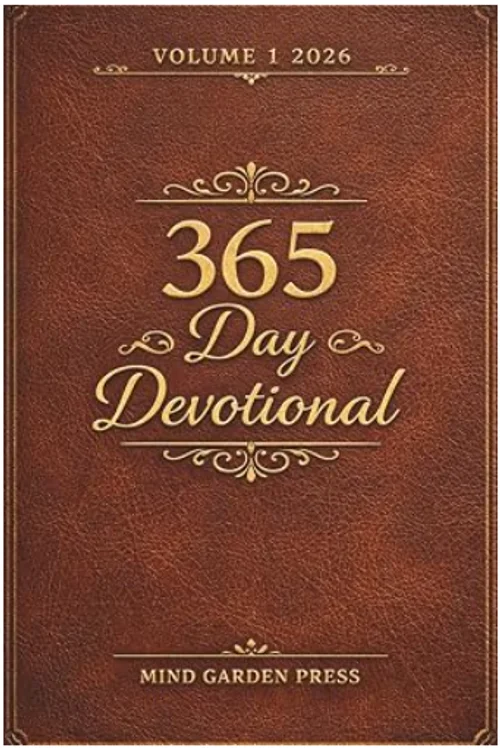
If you're looking for consistent, Scripture-focused content to anchor your devotional journaling practice, the Faith Building Devotional: A 365 Day Devotional with Scripture provides daily readings paired with reflection questions. Each entry gives you a biblical foundation to explore in your journal, taking the guesswork out of what to read next while leaving plenty of room for personal discovery. It's a practical companion for anyone committed to growing their faith through daily time with God.
Related Articles
If you're looking for consistent, Scripture-focused content to anchor your devotional journaling practice, the Faith Building Devotional: A 365 Day Devotional with Scripture provides daily readings paired with reflection questions. Each entry gives you a biblical foundation to explore in your journal, taking the guesswork out of what to read next while leaving plenty of room for personal discovery. It's a practical companion for anyone committed to growing their faith through daily time with God.