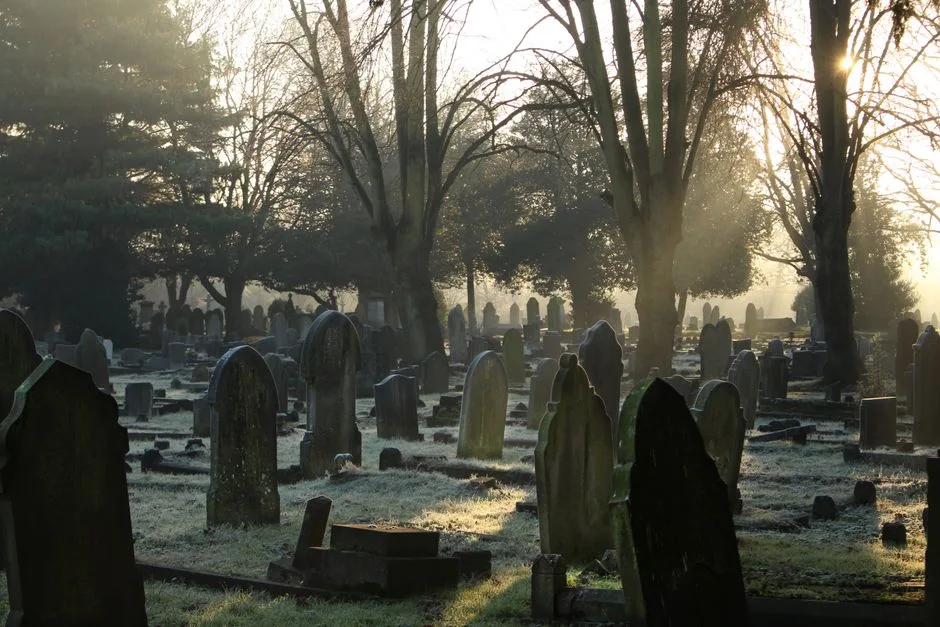
I've stood at more than a few gravesides, including for people I genuinely loved, and I've never found grief to be something faith made disappear. What I have found is that the Bible offers something real underneath the grief, not a denial of death's weight, but a hope that holds even while you're standing right in the middle of loss.
✝ Try FaithSpark Free
AI-powered daily devotionals, a prayer journal, and Bible reader, built by a truck driver who needed something real for the road.
What Does the Bible Say About Death? The Short Answer
The Bible treats death as a real consequence of sin entering the world, and at the same time promises that death has been defeated through Christ's resurrection, offering genuine hope beyond it.
Romans 5:12 traces death back to sin entering the world through humanity's first disobedience. 1 Corinthians 15:26 calls death "the last enemy to be destroyed." Scripture doesn't pretend death is fine or natural in the way the world often frames it, it treats death seriously, as something genuinely wrong, while also promising it doesn't get the final word.
Death Wasn't Part of God's Original Design
Scripture traces death's origin to humanity's disobedience in the garden, indicating it wasn't part of God's original good design for creation but a consequence of sin entering the world.
Genesis 2:17 records God's warning about the tree of the knowledge of good and evil: "for when you eat from it you will certainly die." Romans 5:12 connects the dots: "sin entered the world through one man, and death through sin." This matters because it means death isn't simply a neutral, natural part of an unchanging design, it's a real intrusion, which is exactly why Scripture allows space to genuinely grieve it rather than treating it as something to calmly accept as fine.
Jesus Wept: Permission to Grieve
Jesus's own tears at the tomb of His friend Lazarus, despite knowing He was about to raise him, give direct biblical permission to grieve genuinely, even when hope is present.
John 11:35 contains one of the shortest, most striking verses in the Bible: "Jesus wept." He said this at Lazarus's tomb, moments before raising him back to life. He knew the resurrection was coming, and He still wept. That detail has stayed with me. Hope and grief aren't opposites that cancel each other out in Scripture, they're held together, even by Jesus himself.
1 Thessalonians 4:13 instructs believers not to grieve "like the rest of mankind, who have no hope." Read carefully, that verse doesn't forbid grief. It distinguishes hopeless grief from grief held alongside genuine hope. Both are still grief.
The Resurrection: Christianity's Central Hope
1 Corinthians 15 describes the bodily resurrection of believers, following the pattern of Christ's own resurrection, as the central hope of the Christian faith regarding death, not a vague spiritual afterlife, but a real future hope.
1 Corinthians 15:20-22 says, "Christ has indeed been raised from the dead, the firstfruits of those who have died… so in Christ all will be made alive." Paul goes on, in verse 26, to call death "the last enemy to be destroyed," and by verse 55 he's almost taunting it: "Where, O death, is your victory?" This isn't a soft metaphor. It's the central claim Christianity stakes everything on, that physical resurrection, following Christ's own, is the real future for those who believe.

Psalm 23: Comfort in the Valley
Psalm 23:4 describes walking through "the valley of the shadow of death" without fear, because of God's continued presence even in that specific place, a promise of companionship through death's darkest moments, not removal from them.
Psalm 23:4 says, "Even though I walk through the darkest valley, I will fear no evil, for you are with me." Notice it doesn't promise avoiding the valley. It promises presence within it. That's been true in my own experience of loss. God's nearness didn't remove the pain, but it kept me from walking through it utterly alone.
Facing Death With Real Hope, Not Denial
Christian hope in the face of death isn't denial that death is painful and real, it's a confidence that physical death isn't the final chapter for those who trust in Christ.
If you're grieving right now, or facing your own mortality, I want to be honest: nothing here is meant to talk you out of the real weight of that. Jesus wept too. But the hope Scripture offers isn't pretending death doesn't hurt, it's the promise that it's not the end of the story, for you or for the people you love who trusted in Christ.