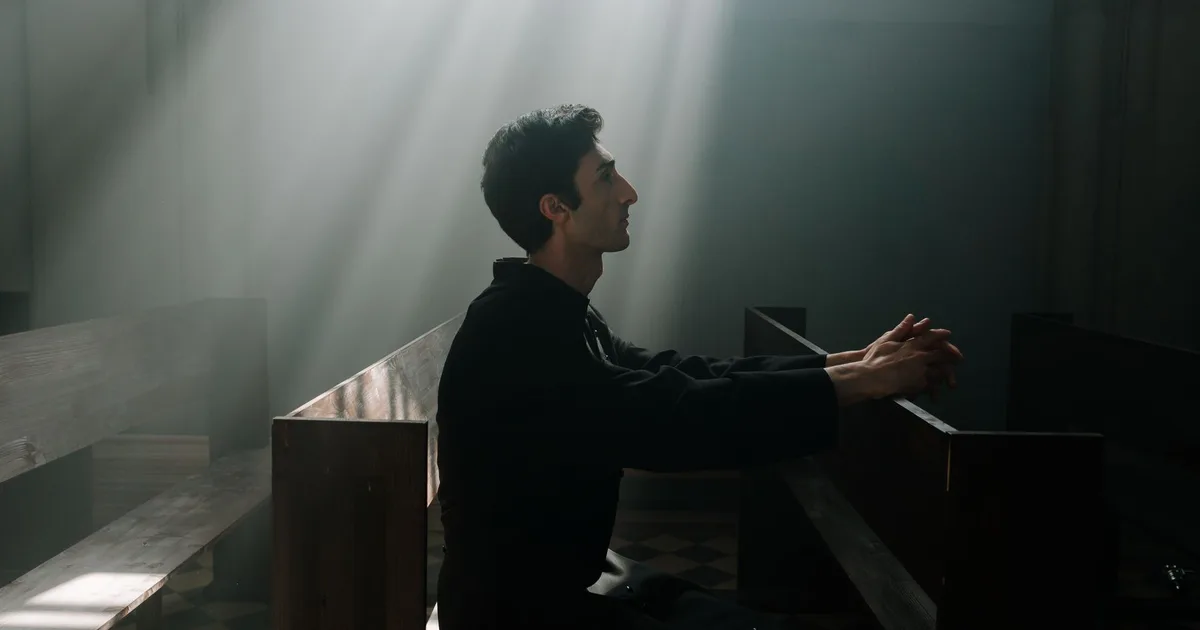
The most important thing I can tell you about how to pray to God is this: He already knows you are coming. He is not surprised by your doubts, your wandering attention, your inability to find the right words, or the week you spent not praying at all before this moment. You are not starting from a standing start. You are returning to a relationship.
That changes everything about how you approach prayer.
✝ Try FaithSpark Free
The FaithSpark Prayer Board and Faith Journal are free tools to support your prayer life at mindgardenpress.com. Join thousands of believers who pray together daily.
The Best Way to Pray Is the Way You Will Actually Do It
There are a lot of books on prayer. I have read several of them. The best thing any of them ever told me was also the simplest: the best prayer practice is the one you will actually maintain.
Some people pray better on their knees. Some people pray better walking. Some people can only really pray when they are writing. Some people pray during their commute. None of these formats is more spiritual than another. The format that works is the one that gets you talking to God every day.
The worst prayer habit is a perfect method practiced three times a year.
How to Start Praying: A Simple Structure
If you have never developed a consistent prayer life and you want to build one from scratch, here is a structure that works. It takes ten minutes. You can do it anywhere.
Start with gratitude. Before you ask for anything, name three specific things you are thankful for. Not generic things. Something from today or this week that God has given you. This practice shifts your posture from demand to trust before you bring a single request.
Bring your actual life. What is actually going on? Your marriage, your health, your finances, your kids, your job, the thing you cannot stop worrying about at 2 AM? Bring it. God is not looking for a polished prayer. He is looking for an honest one.
Pray for other people. Move from your own situation to the people in your life who need prayer. Name them specifically. Say what you want God to do for them. This is intercession, and it is one of the most powerful things a Christian can do for someone they love.
Listen. This is the part most people skip. After you have spoken, sit quietly for a minute. Not because God is guaranteed to audibly respond, but because the posture of listening is itself an act of faith and humility. Sometimes a verse comes to mind. Sometimes a sense of peace settles in. Sometimes nothing happens and you sit there, which is also okay.
What the Best Books on Prayer Actually Teach
If you want to go deeper into prayer, a few books have shaped how I think about it.
"Prayer" by Philip Yancey is the most honest book about prayer I have read. Yancey wrestles with unanswered prayer, the silence of God, and why prayer is hard, without cheap answers. If you have struggled with prayer, this book will make you feel understood.
"The Circle Maker" by Mark Batterson is about praying with bold, specific, persistent faith. The historical story of Honi the Circle Maker is the backbone, but the application to modern prayer life is the real value.
"A Praying Life" by Paul Miller is about integrating prayer into everyday life rather than treating it as a separate spiritual discipline. It is practical and deeply honest about how prayer actually works in a real family with real problems.
All three of these books agree on one thing: the theology of prayer matters less than whether you actually show up and do it.
What to Pray When You Do Not Know What to Say
There are seasons when prayer feels empty. You sit down with every intention of praying and nothing comes. Here are four approaches for those moments.
Pray the Psalms. Open to any psalm and read it slowly. Then write or speak your own response to what the psalm stirs up. The Psalms cover the full range of human experience from praise to despair, so one of them almost always meets you where you are.
Use the Lord's Prayer as a template. Matthew 6:9-13 gives us a framework. Worship (our Father in heaven, hallowed be Your name). Kingdom priority (Your kingdom come, Your will be done). Daily needs (give us today our daily bread). Forgiveness and grace (forgive us as we forgive). Protection (lead us not into temptation). This can be prayed in two minutes or expanded into an hour.
Just talk. Some of the best prayers I have ever prayed were more like talking to a friend than any formal prayer. "God, I don't know what to do about this. I'm tired. I need You to show me something." That is prayer. It counts.
Write it. If you are someone who processes through writing, a prayer journal is not just useful for recording prayers. It is useful for finding them. Sometimes you do not know what you want to say until the pen is moving.

Called to Pray: What That Actually Means for Your Daily Life
Being called to prayer is not about a special gifting some Christians have and others do not. Every believer is called to prayer. 1 Thessalonians 5:17 says to pray continually, and Philippians 4:6 says to bring everything to God. These are not suggestions for especially spiritual people. They are instructions for all Christians.
What it looks like practically is a life in which prayer is not a compartment. Not a morning devotional followed by a day where you never think about God again. It is a conversational relationship that runs underneath everything else. You pray when you are anxious. You pray before you respond to the email that made you angry. You pray when you see something beautiful. You pray when someone you love needs help you cannot provide.
This kind of prayer does not require blocks of time, though dedicated prayer time builds the foundation for it. It requires a posture of ongoing relationship with a God who is always present and always listening.
You can support your prayer life with the free tools at FaithSpark, including a community prayer board, a faith journal, and daily devotionals. All free at mindgardenpress.com/faithspark-app/.