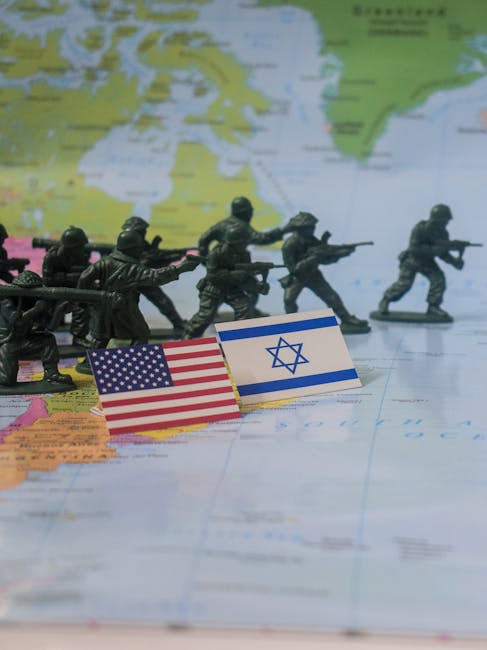

A Fragile Truce and the Weight of Hope
The news that Israel and Hezbollah have agreed to halt fighting has sent ripples of cautious optimism through the Middle East. While the pause is temporary and the underlying tensions remain, it offers a rare moment to reflect on the power of peace—and the role God calls His people to play in it. For Christians, this moment is not just a geopolitical event but a reminder of the divine promise that “the wolf shall dwell with the lamb” (Isaiah 11:6). Yet, the path to such peace is often fraught with human struggle, and the world’s leaders must navigate it with wisdom, humility, and reliance on God’s guidance.
The Biblical Foundation of Peace
The Bible is clear that peace is not merely the absence of conflict but a profound harmony rooted in God’s character. In the Garden of Eden, Adam and Eve lived in perfect peace with God and each other, until sin disrupted that harmony (Genesis 1:26-31). Today, the world’s conflicts mirror that brokenness, but God’s Word offers a vision of restoration. Psalm 34:14 says, “The mouth of the righteous is a law to himself; his lips detest wrongdoing.” This verse underscores the importance of integrity and restraint in times of war. For Israel and Hezbollah, the decision to pause fighting reflects a recognition of this truth. While political motives may drive the truce, the biblical call to pursue peace remains urgent. Jesus’ teaching in Matthew 5:9 (“Blessed are the peacemakers, for they will be called children of God”) challenges believers to see peace as a spiritual discipline, not a political strategy. Even in the midst of war, Christians are called to pray for leaders and seek reconciliation, trusting that God’s purposes transcend human efforts.
The Balance of Power and Divine Sovereignty
The pause in hostilities also highlights the precarious balance of power in the region. US-Iran talks, which have been a focal point of international diplomacy, now hang in the balance. For many Christians, this underscores the tension between human agency and divine sovereignty. While nations negotiate treaties and alliances, the Bible reminds us that “the Lord gives victory to kings” (Psalm 21:13). This is not to diminish the importance of diplomacy but to place it within the context of God’s overarching plan. The Book of Daniel reveals that even in times of great conflict, God’s hand is at work (Daniel 2:21). Christians are called to pray for wisdom in leadership, trusting that God’s will will ultimately prevail. As the Apostle Paul wrote, “We do not wrestle against flesh and blood, but against the rulers, against the authorities, against the cosmic powers over this present darkness” (Ephesians 6:12). The peace process, then, is not just a political act but a spiritual battle.
The Cost of Peace and the Call to Sacrifice
Achieving peace, however, is not without cost. The Bible teaches that true peace requires sacrifice. In the story of the Good Samaritan (Luke 10:25-37), Jesus illustrates that peace is not passive but active—a choice to love enemies and care for the marginalized. For Israel and Hezbollah, this means confronting the deep-seated grievances that fuel their conflict. For Christians, it means confronting the sin of division in our own lives. The pause in fighting may offer a temporary respite, but it also demands accountability. Will this moment be used to build bridges, or will it be another cycle of retaliation? The answer lies in the heart of those who seek peace. As the prophet Isaiah declared, “Let the people praise the Lord for His steadfast love, for His wonders toward the children of men” (Isaiah 63:7). This is a call to celebrate peace, not just in the world but in our own hearts.
A Prayer for Wisdom and Unity
As the world watches this fragile truce, Christians are called to intercede. Let us pray for the leaders of Israel and Hezbollah, that they may see the urgency of peace and the importance of humility. Let us also pray for the United States and Iran, that they may pursue dialogue with the wisdom of God. And let us remember that peace is not just a political goal but a spiritual reality. As we reflect on this moment, may we ask ourselves: How can we live out the peace of Christ in our own lives? How can we be peacemakers in a world that often chooses conflict?
A Call to Action: Live as Children of Peace
The Bible challenges us to live as children of peace, not just in words but in action. This means confronting the sin of division in our communities, seeking reconciliation where possible, and trusting God’s sovereignty in the midst of uncertainty. As we pray for the leaders of the world, let us also pray for our own hearts. May we be people of peace, reflecting the love of Christ to those around us. And may we trust that, even in the darkest moments, God is working to bring about His perfect peace. Prayer: Heavenly Father, we thank You for the moment of peace in the storm. Guide the leaders of Israel and Hezbollah as they seek to honor You in their decisions. Help us, Your children, to live as peacemakers, trusting Your sovereignty in every situation. May our lives reflect the love of Christ, bringing hope to a broken world. In Jesus’ name, we pray. Amen.